
Be warned - this article comes with some salt. Most Australians still think they’re drinking local. A schooner of Carlton Draught in a Melbourne pub. A pint of Great Northern in Queensland. Maybe even a Stone & Wood in Sydney’s inner west.
But here’s the reality: almost 90% of the Australian beer market is owned by two foreign companies - Asahi and Kirin, both based in Japan. That ‘indie’ pale ale? Likely owned by a multinational. The tap list at your local? Contracted and locked, 85% of it untouchable. The independent beer industry isn’t just squeezed - it’s suffocating.
The Monopoly You’ve Never Heard Of
The numbers are brutal:
Asahi, who acquired Carlton & United Breweries (CUB) in 2020, now controls 50% of the Australian beer market. Think VB, Carlton Draught, Great Northern.
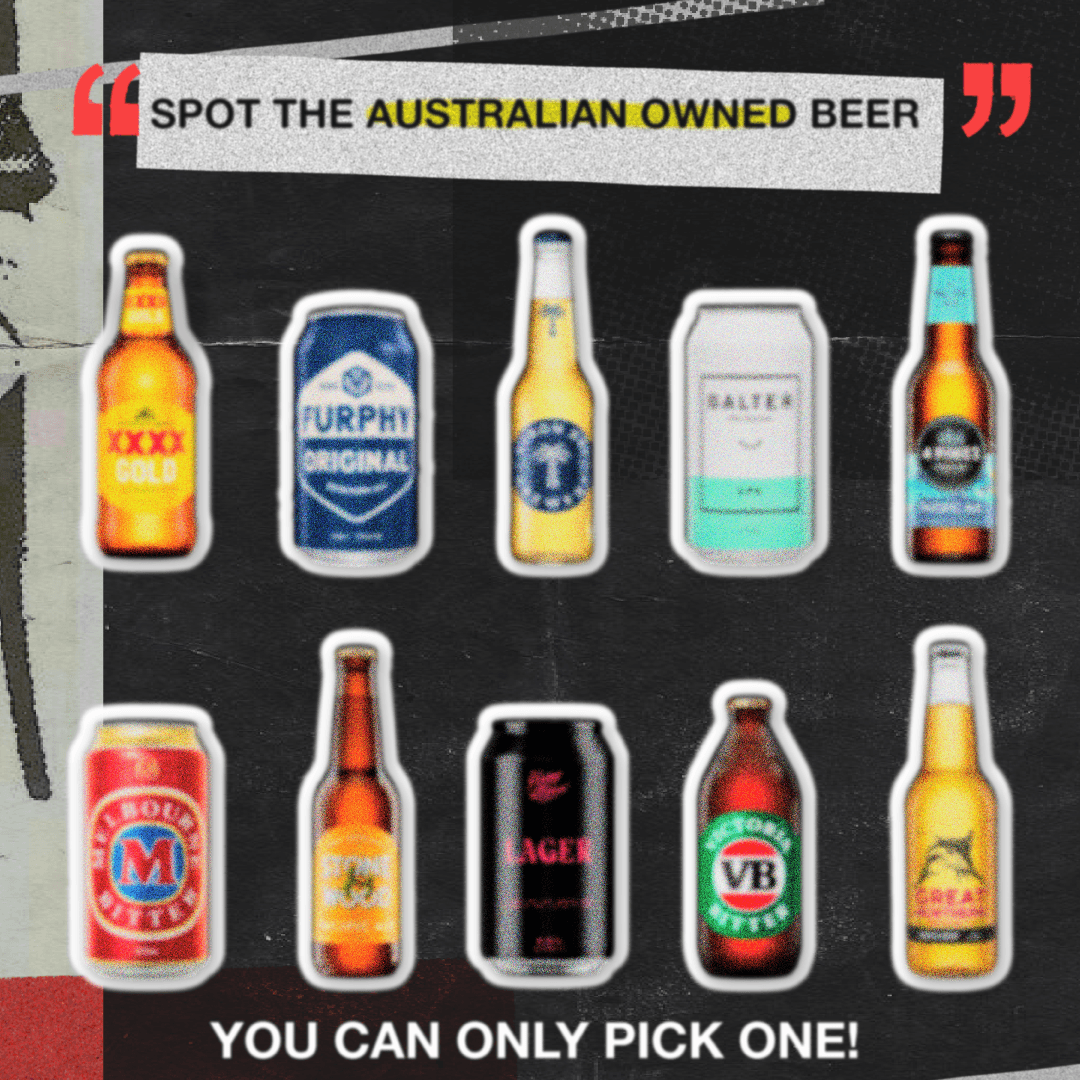
Kirin, through its subsidiary Lion, holds 36.4%, covering brands like XXXX, Tooheys, James Squire, Stone & Wood and Furphy.
Coopers, the largest Australian-owned player, holds just 5.3%.
That means nearly nine out of every ten beers consumed in Australia come from two Japanese-owned companies. The rest? Scraps shared between local independents and the rare Aussie stalwart.
They control pricing, supply chains, tap access, and increasingly, even what lands in your shopping basket. And unlike Coles and Woolworths - who catch flak for price gouging - this beer monopoly flies under the radar.
Because most people still think VB is Australian.
Wolves in Sheep’s Clothing
One of the hardest things for everyday drinkers to spot is who’s actually independent. The big players have mastered the disguise - acquiring beloved craft brands and letting them keep their indie aesthetic, all while folding them into global portfolios.
Stone & Wood? Owned by Kirin. Pirate Life? Snapped up by AB InBev and sold to Asahi. Balter? Owned by Carlton & United Breweries (Asahi). 4 Pines? Also Kirin. Mountain Goat? Long part of Asahi’s stable.
They still wear the indie clothes. But behind the label, it’s business as usual - foreign-owned, corporately managed, and playing by big beer rules.
Locked Out at the Tap
In pubs and bars, most beers are poured from taps controlled by big contracts. Those contracts don’t just cover existing lines - they cover future ones too. Add a new tap to your venue? The brewery contract likely already claims it.
I once tried to bypass this with a pop-up keg fridge - portable, independent, outside the lines. Venues wanted to help - but soon the contracts adapted. They have the people on the ground & it's truly a David vs Goliath. Now, most clauses include any line in the venue, not just what's on the wall.
The message is clear: get in line or get out.
The Indie Squeeze
Independent brewers are now fighting each other for the scraps. Competing for the 10-15% of taps not locked up by contracts. That means publicans hold all the power - on price, placement, and whether you pour at all.
The result? Breweries discount to survive. Quality suffers. Consumers lose. And the illusion of choice stays intact.
Retail’s Not Better
Off-premise isn’t safer. Woolworths and Coles don’t just sell beer - they own the distribution. Think Dan Murphy’s, BWS, Liquorland. They’ve launched their own private-label beers, often under pseudo-indie branding. They control shelf space, pricing, and placement.
If they don’t stock you, you barely exist.
No One’s Talking About It
This level of market control would be national news in other sectors. Coles and Woolies get grilled. Qantas gets shredded. But beer? The big guys play quietly. They fund festivals, slap “crafted in Australia” on the label, and lean on nostalgia.
All while independent brewers go under.
I’ve Been There
From 2018 to 2024, I ran my own beer brand—Youngblood. We brewed. We designed. We marketed. We knocked on every door. And we hit the same wall everyone else does: locked taps, monopolised shelves, razor-thin margins.
Even our best ideas got boxed out.
It wasn’t the product that failed. It was the system.
A Wave of Collapses
In the last 12 months, we’ve watched independent breweries fall like dominoes. Major names - well-distributed, well-loved -still entering voluntary administration. A few make it out. Most don’t.
This isn’t mismanagement. It’s a market designed to choke them out. The system forces small breweries to compete with each other while the giants lock down distribution, retail, and taps.
In March 2025 alone, multiple high-profile independents collapsed in a single 24-hour window. If that doesn’t sound the alarm, nothing will. This isn’t about survival of the fittest - it’s survival of the funded.
The middle is disappearing. Good ideas. Good beer. Gone.
The Jobs Story No One Talks About
Despite holding less than 10% of the Australian beer market, independent brewers are responsible for 51% of all employment in the brewing industry. They directly employ over 7,000 people, and indirectly support more than 33,000 jobs across agriculture, logistics, manufacturing, and hospitality.
These aren’t faceless factory roles—they’re local jobs tied to real communities. Every tap pulled at a neighbourhood bar, every pallet delivered to a small bottle shop, every can designed and packed - those are people, not just percentages.
So when an independent brewery shuts its doors, the impact runs deep. It’s not just about beer - it’s about livelihoods.
What Now?
Awareness is step one. Australians deserve to know who owns their beer. What’s actually independent. Who’s fighting to stay alive.
Support your local taproom. Ask questions. Check the label. Push for transparency.
The beer you drink should be a choice - not a trick.
Because independence doesn’t just taste better. It matters.